
CHRONICLES OF TALES

How a master weaver 'reads' a finished saree to find errors

PSR SILKS 0 Comments

Ā  Craft & Weaving How a master weaver 'reads' a finished saree to find errors Touch, pull, light angle, sound, and sight — in that order. The inspection of a finished Kanjivaram saree by a master weaver takes less than five minutes and reveals every flaw that fourteen days of weaving might have produced....
View Details

The geometry behind Kanchi "TEMPLE BORDER" calculations

PSR SILKS 0 Comments

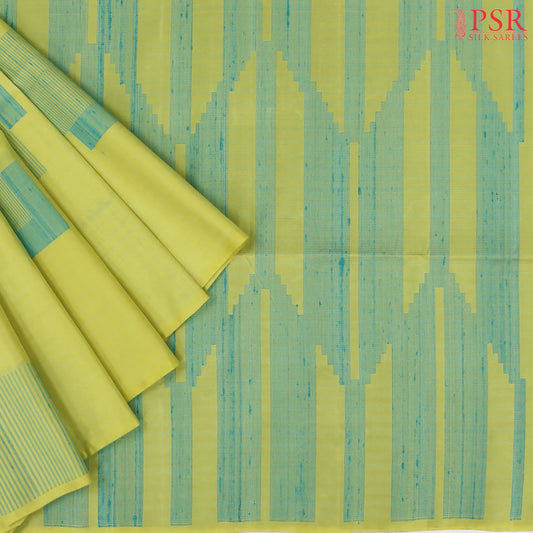
Ā  Craft & Weaving The geometry behind Kanchi temple border calculations The stepped triangle you see on a Kanjivaram border is not decorative inspiration loosely drawn from a temple tower. It is the temple tower — translated tier by tier, proportion by proportion, into thread counts and weft rows. The weavers are applying architecture....
View Details

What happens 30–40% of silk that breaks during weaving

PSR SILKS 0 Comments

Ā  Craft & Weaving What happens to the 30–40% of silk that breaks during weaving Silk weaving is a process of deliberate and unavoidable loss. A significant portion of every thread prepared for a saree will break, fray, or be trimmed before the fabric is finished. India's weaving communities built an entire second economy...
View Details

The forgotten pit loom — and why modern weavers are returning

PSR SILKS 0 Comments

Ā  Craft & Weaving The forgotten pit loom — and why modern weavers are returning to it For decades, frame looms replaced pit looms across India's weaving clusters. They were cheaper to build, easier to move, and required no pit to be dug. The fabric was also measurably different. Weavers who have switched back...
View Details

Why some Patola sarees are woven from both ends simultaneously

PSR SILKS 0 Comments

Ā  Craft & Weaving Why some Patola sarees are woven from both ends simultaneously The double ikat requires both warp and weft to be resist-dyed before a single thread is woven. When they finally meet on the loom, every intersection has been calculated in advance — to the nearest hundredth of an inch. There...
View Details